Milestones Toward Zero Marine Debris
Together with those working to reduce marine debris.
We will recover the debris that has already entered the environment.
Solving the marine debris problem requires both reducing the flow of new waste into the natural environment and recovering debris that has already entered and accumulated there.
While businesses, governments, waste management operators, research institutions, local organizations, and others take the lead in reducing new leakage, Clean Ocean Ensemble takes responsibility for recovering marine debris that has already entered the environment.
We recover debris from rivers, shorelines, coastal and offshore waters, and the seafloor; sort, weigh, and document it; and connect recoverable materials to recycling and resource recovery. Increasing the amount recovered, making the results visible and verifiable, and expanding recovery as a sustainable system – this is our role.
The relationship among the accumulated stock of marine debris, the amount newly leaked, and the amount recovered can be expressed by the following equation.

This is a basic mass-balance concept that compares leakage and recovery within the same geographic scope, time period, and unit of weight.
If leakage and recovery are equal, the accumulated stock of marine debris does not increase, but the debris already present does not decrease either. If recovery continues to exceed leakage, and the cumulative value of “recovery minus leakage” reaches or exceeds the initial stock, the model indicates that the accumulated stock within the defined scope approaches zero.

By “zero marine debris,” we do not mean cleaning the ocean only once.
We mean creating a sustained condition in which efforts to reduce leakage and efforts to recover debris already in the environment work together, society’s annual recovery consistently exceeds annual leakage, and the marine debris accumulated over time continues to decline.
What began on Shodoshima will grow into a larger ensemble working together to restore the world’s oceans.
2020
Our Journey Toward Zero Marine Debris Begins on Shodoshima
In December 2020, Clean Ocean Ensemble was established as a nonprofit organization based on Shodoshima Island in Kagawa Prefecture, Japan.
We began tackling the marine debris problem from the field by combining recovery activities, research, technology development, resource recovery, and public awareness.
A small first step to protect the local sea became the beginning of a long-term challenge toward zero marine debris worldwide.
2021
Learning from the Field and Understanding the Nature of the Problem
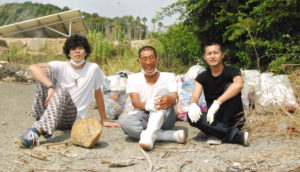
We participated in and studied a wide range of marine debris recovery activities across Japan, learning in the field where marine debris comes from, how it moves, and where it accumulates.
While experiencing firsthand the importance of people collecting debris by hand, we also confronted the reality that existing methods alone cannot recover the enormous amount of waste already released into the natural environment.
We also found that recovery locations, recovered amounts, debris types, treatment destinations, and other information were often not adequately recorded, making the collective impact of individual activities difficult to see.
These experiences led us to believe that, in addition to continuing recovery activities, we need systems that enable more efficient recovery, document, visualize, and verify the results, and connect recovered materials to resource recovery.
2022
Developing a Low-Cost Recovery Device and Learning Through Failure
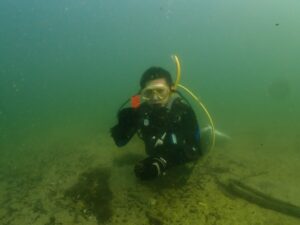
To recover debris that had already entered the ocean more efficiently, we began developing a low-cost floating recovery device using readily available materials.
We prototyped Devices No. 1 through No. 3 along the coast of Shodoshima and conducted at-sea trials, but the first experiments were not successful.
We encountered the difficulty of operating technology in natural environments affected by waves, tides, wind, drifting objects, durability requirements, safety, and installation conditions.
Through these failures, we learned that recovery technology for real-world use requires not only device performance, but also safety, operability, cost-effectiveness, and collaboration with local communities.
2023
Our First Successful At-Sea Trial and the Foundations of Recovery, Visualization, and Resource Recovery
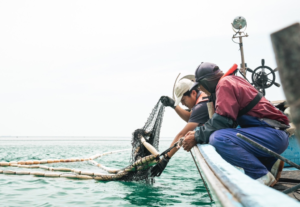
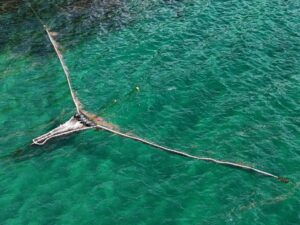
After repeated improvements, we developed and operated Devices No. 4 through No. 6 and achieved our first successful at-sea recovery demonstration.
By investigating where debris drifts and accumulates, we began to see the potential of recovery methods that make use of natural flows.
At the same time, we launched the concept of the Marine Debris MAP to document and visualize recovery locations, recovered amounts, and debris types. We also began working with material-specific resource recovery partners so that recovered debris could be put back to productive use.
Our cumulative recovery exceeded 1,000 kg, and our activities moved from simply “picking up” debris to building a system that recovers it, records it, and returns it to use as a resource.
2024
From the MAP and Recovery Support Certificates to River Recovery Technology – Turning Activities into a System
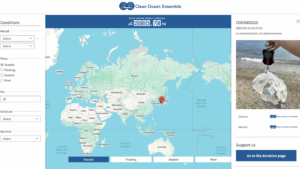
We released a prototype of the Marine Debris MAP, creating a system for recording and sharing activity data through an app and an online map.
We also began issuing Recovery Support Certificates to make visible the contributions of companies and individuals supporting recovery activities. This created a way to communicate contributions to marine debris recovery as concrete results.
We also began developing and operating a river recovery device to collect debris that had already entered the natural environment and was flowing through rivers.
In Mozambique, we launched trials of a marine recovery device and began testing how technology developed in Japan could be used in different natural environments.
Our cumulative recovery exceeded 2,000 kg, and the effort to connect recovery, documentation, verification, and resource recovery moved into full operation.
2025
Demonstrating a River Debris Recovery Device and Building a Sustainable Local Model
To recover debris that had already entered the natural environment and was flowing through rivers more efficiently, we expanded demonstrations of the “kawasemi” river debris recovery device.
By testing differences in season, water volume, weather, and installation site, we improved recovery efficiency, safety, installation and removal procedures, maintenance, and collaboration with local communities.
We continued accumulating data in the Marine Debris MAP, issuing Recovery Support Certificates, and expanding partnerships for resource recovery. Our work developed from one-off cleanups into a recovery model that can be operated continuously.
Activities in Japan, including Kobe, and collaboration with overseas regions also expanded, and the foundation began to take shape for full-scale marine debris recovery from 2030 onward.
2026
Building the Foundation for Our Next Stage as a Recovery Organization
Clean Ocean Ensemble will place an even clearer focus on recovering marine debris that has already entered the natural environment.
We will treat the recovery of debris from rivers, shorelines, coastal and offshore waters, and the seafloor – together with sorting, weighing, documentation, and resource recovery – as an integrated process, and build the foundation needed to expand recovery continuously.
The Marine Debris MAP will evolve from a simple activity-recording tool into a platform that stores recovery locations, dates, weights, classifications, recovery methods, treatment destinations, resource recovery destinations, and other information under common standards, making recovery results visible and verifiable.
We will organize recovery targets and the technologies required for rivers, shorelines, coastal and offshore waters, the seafloor, ghost gear, microplastics, and other environments, and clarify priorities for technology development and demonstration.
We will share data and field knowledge with businesses, governments, waste management operators, research institutions, and local organizations that lead efforts to reduce leakage, while maintaining a clear division of roles.
We will build the technological, human, financial, and partnership foundations required for full-scale recovery from 2030 onward.
2027
Turning Recovery into Verifiable Results
The Marine Debris MAP will develop into a recovery-results platform that accumulates the outcomes of recovery activities and communicates them to society.
Photographs, location data, dates, weights, debris classifications, recovery methods, numbers of participants, treatment destinations, resource recovery destinations, and other information will be recorded under common standards, progressively improving the reliability of activity data.
Beyond Clean Ocean Ensemble’s own activities, we will collaborate with community groups, schools, companies, and local recovery teams in Japan and overseas, transforming marine debris recovery that has previously been conducted separately into social impact that can be compared, aggregated, and verified.
We will also design methods to connect data from businesses, governments, research institutions, and others working to reduce leakage with the recovery data we accumulate, so that we can assess whether marine debris in a target area is increasing or beginning to decline.
2028
Expanding Technology Demonstrations for Hard-to-Recover Debris Already in the Environment
We will expand technology demonstrations for debris that is difficult to recover using existing methods, including riverborne debris, shoreline debris, floating marine debris, seafloor debris, ghost gear, and microplastics.
In collaboration with research institutions, companies, fishers, divers, marine technology specialists, and others, we will evaluate recovery volume, safety, environmental impact, operating cost, and ease of maintenance under field conditions.
Rather than developing every technology on our own, we will co-develop and demonstrate solutions with partners who have specialized expertise. Clean Ocean Ensemble will provide field sites, recovery data, and operational know-how.
We will select promising technologies not only for their novelty, but also for whether they can actually increase recovery volume and be operated continuously and safely, and advance them to the next stage of implementation.
2029
Standardizing a Model for Recovery, Quantification, and Resource Recovery
We will standardize a single recovery model that integrates recovery technology, field operations, sorting and weighing, documentation in the Marine Debris MAP, Recovery Support Certificates, resource recovery, and sustainable funding.
The model will be adaptable to local environmental conditions and debris characteristics while enabling recovery results to be measured, compared, and accumulated under common standards.
Businesses, governments, local organizations, and others responsible for reducing leakage will share regional leakage estimates and reduction results, while Clean Ocean Ensemble will take responsibility for increasing the amount of debris recovered from the environment and for measuring, recording, and verifying those results.
By combining these datasets, we aim to determine whether the total amount of marine debris in each target area is increasing or beginning to decline.
We will operate this recovery model in multiple regions in Japan and overseas and complete preparations for full-scale recovery of marine debris already in the environment from 2030 onward.
2030
Entering the Full-Scale Recovery Phase for Marine Debris Already in the Environment
From 2030 onward, Clean Ocean Ensemble will advance full-scale recovery of marine debris that has already entered the natural environment and accumulated in rivers, on shorelines, in coastal and offshore waters, and on the seafloor.
Efforts to reduce new leakage will be led by businesses, governments, waste management operators, research institutions, local organizations, and other stakeholders.
As a core actor on the recovery side, we will take responsibility for increasing recovery, measuring the results, sustaining the work, and expanding it, and will put into practice systems that reduce marine debris already in the environment.
We will develop the Marine Debris MAP into a shared platform that accumulates verifiable recovery records from around the world and connects recovery technologies, local recovery teams, funding from companies and foundations, research expertise, and resource recovery partners.
Working with those responsible for reducing leakage, we will create conditions in target areas where society’s total annual recovery exceeds annual leakage.
By accumulating that difference year after year, we will begin to measurably reduce the stock of marine debris left in the natural environment over time.
The year 2030 is not the year in which zero marine debris is achieved.
It is the year in which we transition from slowing the growth of marine debris to reducing the debris that already exists at full scale.
2035
Demonstrating a Decline in Marine Debris Accumulation Across Multiple Regions
In multiple target areas, those responsible for reducing leakage and those responsible for recovering debris already in the environment will work together to demonstrate a sustained condition in which annual recovery exceeds annual leakage.
Clean Ocean Ensemble will be responsible for recovering debris from rivers, shorelines, coastal and offshore waters, and the seafloor, as well as quantifying, recording, verifying, and connecting the results to resource recovery.
We will accumulate the annual difference between recovery and leakage and use the Marine Debris MAP, field surveys, and third-party verification to demonstrate that the stock of marine debris accumulated over time is actually declining.
We will share the technologies, measurement methods, operational know-how, and funding mechanisms developed through this work and expand them as a recovery model that can be adopted in other regions.
2040
Expanding Recovery Infrastructure for Marine Debris Already in the Environment Worldwide
We will build an international network in which recovery teams, NPOs, companies, research institutions, local governments, fishers, and local communities around the world can continuously recover marine debris using technologies suited to their regions and common measurement standards.
Clean Ocean Ensemble will not directly recover every piece of debris around the world.
Instead, we will serve as a platform that connects local people carrying out recovery with recovery technologies, data infrastructure, operational funding, research expertise, and resource recovery partners, strengthening each region’s recovery capacity.
We will expand the social infrastructure needed for sustainable recovery to take place routinely not only on shorelines, but also in rivers, coastal and offshore waters, on the seafloor, and in difficult fields such as ghost gear and microplastics.
Marine debris recovery will evolve from an activity dependent on temporary events and goodwill into essential social infrastructure.
2050
Continuing to Recover What Has Entered the Ocean – Worldwide
By 2050, we aim for a world in which efforts to prevent marine debris and efforts to recover debris that has already entered the environment both function effectively, each drawing on its own expertise.
Businesses, governments, waste management operators, local communities, and others will lead efforts to reduce new leakage, while Clean Ocean Ensemble will help provide international recovery infrastructure connecting recovery technologies, quantification, visualization, verification, resource recovery, and operational funding for marine debris already in the environment.
Across regions around the world, society’s total annual recovery will continue to exceed annual leakage. By accumulating that difference, we will steadily reduce the marine debris built up over time.
We will not leave debris in the ocean simply because it is difficult to recover.
Marine debris recovery will continue not as temporary goodwill, but as an indispensable part of society.
What began on Shodoshima will grow into a larger ensemble working together to restore the world’s oceans.
To pass on a beautiful and abundant ocean to future generations, we will continue recovering the marine debris that has already entered the environment.